Mental Requirements
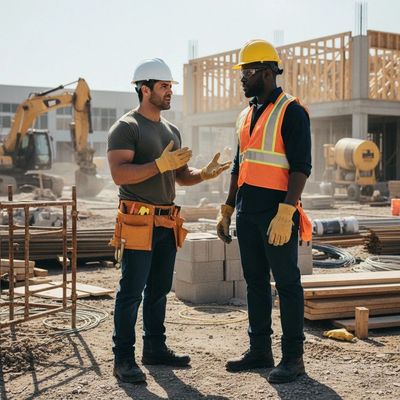
What are the mental requirements
1. Logical Thinking (Core Requirement)
Logic is the backbone of every trade.
Effective tradespeople must be able to:
- Identify cause and effect
- Eliminate variables systematically
- Follow sequences in the correct order
- Understand how one change impacts an entire system
Examples:
- A breaker trips → Why?
- A weld fails → What changed?
- A pipe leaks → Where did pressure or alignment fail?
- A system won’t cool → Which component broke the chain?
Logical thinking turns guesswork into diagnosis.
2. Problem Decomposition
Tradespeople rarely face simple problems.
They must be able to:
- Break complex systems into smaller parts
- Test one section at a time
- Rule out what works before replacing what doesn’t
- Avoid random trial-and-error
This skill separates professionals from parts-changers.
3. Attention to Detail
Small mistakes have real consequences.
Effective tradespeople must:
- Notice slight differences in measurements
- Recognize unusual sounds, smells, or readings
- Catch errors before systems are energized, pressurized, or sealed
- Follow procedures exactly when safety is involved
Precision is mental discipline, not just technique.
4. Spatial Reasoning
Trades require strong mental visualization.
This includes:
- Understanding how systems fit behind walls, under floors, or inside equipment
- Visualizing layouts before installation
- Interpreting drawings, diagrams, and schematics
- Anticipating future access and serviceability
Good tradespeople think in three dimensions.
5. Focus & Mental Endurance
Many tasks require sustained concentration.
Effective tradespeople can:
- Maintain focus for long periods
- Perform repetitive tasks without losing accuracy
- Resist rushing when under pressure
- Stay mentally sharp in uncomfortable environments
Consistency matters more than speed.
6. Adaptability & Learning Mindset
The trades constantly evolve.
Mental flexibility includes:
- Learning new codes and standards
- Adapting to new tools and technology
- Accepting feedback and correction
- Updating methods as systems change
Those who stop learning fall behind.
Foundational School Skills Required
You do not need to be a straight-A student to succeed in the trades—but you must master certain fundamentals.
7. Reading Comprehension
Tradespeople must be able to:
- Read manuals and installation instructions
- Understand safety warnings
- Interpret codes and standards
- Follow step-by-step procedures
Misreading instructions can lead to costly or dangerous mistakes.
8. Writing & Documentation
Basic writing skills are essential for:
- Work orders
- Reports and inspections
- Notes for other technicians
- Customer explanations
Clear communication prevents errors and protects your reputation.
9. Mathematics (Practical, Not Abstract)
Math is used daily in the trades.
Required skills include:
- Addition, subtraction, multiplication, division
- Fractions and decimals
- Unit conversions
- Measurement and estimation
- Ratios and percentages
Examples:
- Load calculations
- Pipe sizing
- Voltage and amperage
- Airflow and pressure
- Material quantities
You don’t need calculus—but you must be accurate.
10. Measurement Accuracy
Trades rely on precise measurement.
This includes:
- Reading tape measures
- Using levels and gauges
- Understanding tolerances
- Verifying measurements before cutting or installing
“Close enough” is rarely acceptable.
11. Basic Science Understanding
A practical grasp of science helps explain why systems work.
Key concepts include:
- Cause and effect
- Pressure and flow
- Heat transfer
- Electrical principles
- Material properties
Understanding why something works makes troubleshooting faster and safer.
12. Decision-Making Under Pressure
Tradespeople often work with:
- Live systems
- Time constraints
- Cost implications
- Safety risks
Mental readiness means:
- Slowing down when needed
- Making decisions based on logic, not emotion
- Knowing when to stop and reassess
Good decisions protect lives and careers.
13. Responsibility & Accountability
Mental maturity is essential.
Successful tradespeople:
- Own their work
- Correct mistakes
- Follow codes even when shortcuts exist
- Understand that quality reflects personal integrity
Reputation is built one job at a time.
Physical Requirements
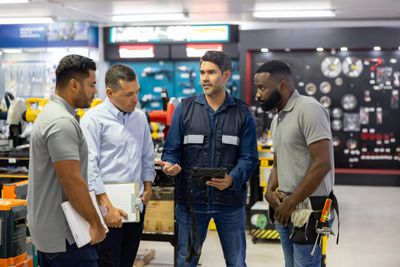
Below are the core physical readiness expectations common across most trades
1. Consistent Alertness & Mental Sharpness
Trades work demands full awareness throughout the workday. Technicians must:
- Quickly recognize hazards
- Accurately follow instructions and diagrams
- Respond to changing job-site conditions
- Maintain attention during repetitive or detail-oriented tasks
Being clear-headed, focused, and mentally present is essential for safety and quality workmanship.
2. Healthy Energy Levels & Endurance
Many trade roles require sustained physical effort over long periods. Workers should be able to:
- Remain productive through full shifts
- Maintain steady energy without frequent fatigue
- Handle physically demanding tasks without performance drop-off
Proper rest and recovery support consistent performance from start to finish.
3. Balance, Coordination & Body Control
Trades frequently involve working:
- On ladders, scaffolding, or elevated platforms
- In confined spaces
- Around moving equipment or live systems
Strong coordination, steady footing, and controlled movement are critical to maintaining safety for both the worker and those nearby.
4. Strength & Functional Mobility
Most skilled trades require:
- Lifting, carrying, pushing, or pulling tools and materials
- Reaching overhead, kneeling, bending, or crawling
- Repeated use of hands, wrists, and arms
Functional strength—rather than brute force—helps reduce strain and prevents injury over a long career.
5. Reaction Time & Situational Awareness
Job sites can change quickly. Tradespeople must:
- React promptly to unexpected conditions
- Anticipate equipment movement
- Maintain awareness of coworkers and surroundings
Quick, accurate reactions help prevent accidents and ensure smooth teamwork.
6. Physical Stability & Steadiness
Precision work requires a steady hand and controlled movement, especially when:
- Connecting electrical components
- Welding joints
- Installing piping or mechanical parts
Physical steadiness supports quality craftsmanship and reduces costly mistakes.
7. Heat, Cold & Environmental Tolerance
Trades often involve working in:
- High heat or humidity
- Cold or windy environments
- Indoor mechanical rooms or outdoor job sites
Physical preparedness includes the ability to function safely and effectively in varying conditions.
8. Recovery & Readiness Between Workdays
Long-term success in the trades depends on the ability to:
- Arrive each day refreshed and ready to work
- Maintain consistent performance across the week
- Recover physically between shifts
Professional tradespeople treat recovery as part of the job.
9. Personal Discipline & Professional Habits
Physical readiness is supported by strong daily habits, including:
- Arriving on time and prepared
- Maintaining consistent routines
- Taking care of physical well-being
These habits build trust with employers, coworkers, and clients.
Why Physical Readiness Matters in the Trades
Trades are high-responsibility careers where physical condition directly impacts:
- Personal safety
- Team safety
- Work quality
- Career longevity
Those who maintain strong physical readiness often advance faster, earn more, and experience fewer injuries over time.
TradeBrain Insight
The trades reward discipline, consistency, and preparedness.
Physical readiness isn’t about being perfect—it’s about being reliable, alert, and ready to perform every day.